
Determined
A party that means to be activist in instituting bold reforms for economic and social progress: food, education, justice, health, quality housing, decent work, social protection.
The Front for the Refoundation of the Nation is a politico-military movement created on 12 October 2026 in Goma. It succeeds by right to the Congo River Alliance and carries an alternative: to rebuild the Congolese State.
The Front for the Refoundation of the Nation was founded on 12 October 2026 in Goma by a collective act signed by its founders, on the basis of article 64 of the Constitution. The adoption of that act definitively ends the existence of the Alliance Fleuve Congo, to which the Front succeeds by right, taking over its structures, its commitments and the Doha process.
« Il ne s'agit pas de remplacer un clan par un autre, mais de reconstruire un État capable de protéger, de rendre justice, de garantir la citoyenneté à tous, de redistribuer équitablement les richesses, d'assurer la réconciliation nationale, de garantir le retour digne des réfugiés ainsi que des exilés politiques et d'associer réellement les provinces aux décisions qui engagent leur avenir. »
Political declaration of the Front for the Refoundation of the Nation, signed in Goma

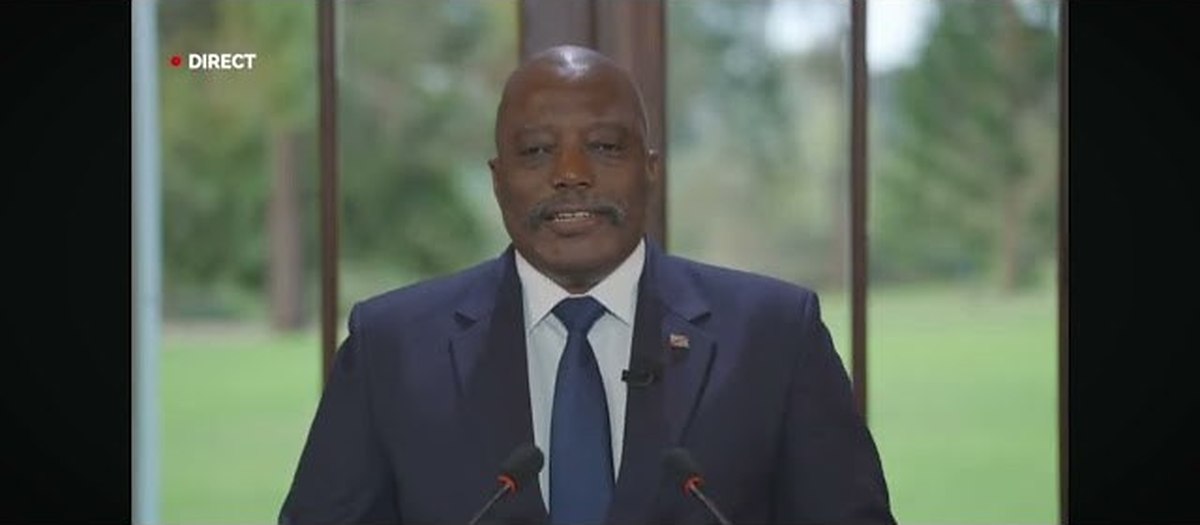
Joseph Kabila reunited a fragmented Congo, restored the Republic’s sovereignty over its resources, opened negotiations with the armed movements of the East and signed the peace and reconciliation agreement. In 2025, seeing war return and institutions collapse, he broke his silence: he did not come back to start over, but to save the gains of unification. The Front is that legacy, not nostalgia.

 Photograph — Archives of the Front

The Front does not improvise. Its Charter, adopted by the Executive Committee and applied by all the organs, is a text of government, not a press release. It sets the movement’s doctrine, foundations, priorities and method.
A party that means to be activist in instituting bold reforms for economic and social progress: food, education, justice, health, quality housing, decent work, social protection.
“Only what actually works is true.” A policy is judged first by its practical consequences. Pragmatism is a philosophical attitude, not a dogma.
An open economy, driven by the market, supported and regulated by the State: freedom of enterprise, but also solidarity, social justice, equity and access for all to the common goods.

« Rupture avec les antivaleurs du passé et du présent. Mobilisation des énergies, de l'audace, de la créativité et des intelligences des Congolais pour bâtir ensemble un Congo nouveau, par nos têtes et par nos mains, en comptant d'abord sur nos propres forces. »
The refoundation programme rests on a simple conviction: a country is not refounded by its summit alone, but by a change of minds.
“The Front proposes this historic revolution of minds, which will make every Congolese a kneader of the present, a builder of the future and a sower of hope.”
« Il est temps d'écrire une nouvelle page de l'Histoire du Congo, notre page de l'Histoire, avec nos intelligences et à l'encre de notre sueur. »Charter of the Front for the Refoundation of the Nation
« L'émergence d'un Congo économiquement puissant, géo-stratégiquement incontournable et politiquement présent sur la scène internationale est possible. »Charter of the Front for the Refoundation of the Nation
The principles of the Front are those set out in the Congolese Constitution and formulated in the Charter of the Front: self-determination, work, justice, solidarity, civic duty, equal opportunity, peace and integrity.
The Congolese people decide their own destiny. No decision is taken in their place, and no power legitimises itself by force alone.
Reconstruction is measured by the work produced and the jobs created in the provinces, not by the speeches of the capital.
Independent courts, regular procedures, the end of arbitrariness and reparation for victims.
The producing provinces are not abandoned. The wealth of the country is a national responsibility.
To educate the people in their duties and their rights: the condition of a democracy that cannot be instrumentalised.
Neither nepotism, nor favouritism, nor exclusion. Access to public office and public contracts is open, competitive and transparent.
Peace is not the absence of war: it is a State that protects, that delivers justice and that honours its commitments.
Integrity of the territory, of the institutions and of its given word. The credibility of a State is built on the agreements it keeps.
The Front was born in Goma, but its programme is national. The Congolese East — North Kivu, South Kivu, Ituri — is at once the place of the catastrophe and the laboratory of what the country must cease to be.


A programme conceived at the scale of the country, not of a single territory.
The social reference figure behind the Front’s diagnosis.
A level of indebtedness incompatible with economic sovereignty.
Yes. The adoption and signature of the founding act “definitively ends the existence of the Alliance Fleuve Congo”, and the Front “succeeds by right” to the AFC, taking over its structures, its commitments and the Doha process.
On the basis of article 64 of the Constitution, through a collective act signed by its founders on 12 October 2026 in Goma. Its legal personality and its status under the law on political parties fall within the competence of the competent authorities of the Democratic Republic of the Congo.
They are the ones set out by the Congolese Constitution and formulated by the Front's Charter: self-determination, work, justice, solidarity, civic-mindedness, equality of opportunity, peace and integrity. They are stated one by one in the “Values and principles” section.