
An endogenous crisis
A crisis that is essentially endogenous, born of the irresponsibility and the poor choices of the government in Kinshasa. The legitimacy claimed from the 2023 elections, considered chaotic, is denied by the signatories.
Rupture — Refoundation — Emergence
“To do nothing is to be complicit.”
The Front for the Refoundation of the Nation (FRN) is a Congolese political and military movement founded on 12 October 2026 in Goma, by a collective act signed by its founders on the basis of article 64 of the Constitution. It succeeds by right to the Alliance Fleuve Congo and is placed under the authority of Joseph Kabila, president of the Front. Its reference text is “The Pact for National Renewal”, published in French and in English on 26 October 2026.
The Congolese crisis is neither a mere quarrel between politicians nor a purely security matter. It is political, economic, security-related, moral, institutional, social and humanitarian at once — an existential threat weighing on the Republic as a State and as a Nation.
A crisis that is essentially endogenous, born of the irresponsibility and the poor choices of the government in Kinshasa. The legitimacy claimed from the 2023 elections, considered chaotic, is denied by the signatories.
Constitutional violations, the instrumentalisation of justice, arbitrary arrests and detentions targeting officers, opponents, journalists and human rights defenders.
Public debt that has swollen beyond eighteen billion dollars, the methodical plunder of resources, and no guarantee of the country's productive sovereignty.
More than 80 per cent of the population lives below the poverty line, in chronic famine, with very high infant mortality and unemployment striking millions of Congolese.
The government is accused of having chosen war over peace, of calling on foreign armies and mercenaries, of distributing weapons to civilians, and of integrating elements of the FDLR and the ADF into the army.
Reconciliation and the consolidation of national unity have given way to hate speech financed and carried by officials, with discrimination directed at Tutsis and Rwandophones.
The Doha negotiations are failing for lack of political will in Kinshasa. Commitments on the ceasefire and the release of prisoners are not honoured. The head of state is said to be buying time to relaunch the war.
Hundreds of thousands of displaced persons, large-scale political exile and a weakened civil security make it imperative to guarantee the dignified return of refugees and political exiles.
Eighteen months after his address of 23 May 2025, Joseph Kabila addresses the nation again: an indictment of the governance, a call for an inclusive national dialogue, and the announcement of a new political step.
“The Congo is in peril; saving it is an imperative and an urgency.”Joseph Kabila — Address to the Nation, 9 October 2026
“Betrayed by the man who had sworn to protect him […] the Congolese people have an appointment with history: either they take charge of themselves today, or they betray their destiny of greatness.”Joseph Kabila — Address to the Nation, 9 October 2026
“Nearly a year and a half after my address of 23 May 2025, I have to note that my proposals, warnings and advice have been superbly ignored […] the general situation of the country has therefore gone on worsening.”Joseph Kabila — Address to the Nation, 9 October 2026
“Not being one of those who shirk their duty, I will therefore share with our people, in the hours, days or weeks to come, my conviction on what we must undertake together.”Joseph Kabila — Address to the Nation, 9 October 2026
Formulated on 23 May 2025, repeated and hardened on 9 October 2026, these twelve measures form the backbone of the FRN's programme of refoundation. They are set out here as concrete actions.
Break with a power that maintains itself through fear, division and the closure of institutions. Legitimacy is rebuilt on a restored Constitution, free elections and an independent judiciary.
An immediate, effective and verifiable ceasefire, as the precondition for any dialogue. The eastern Congo can no longer be the laboratory of an endless war.
The state recovers the capacity to enforce the law across the whole territory, from the river to the lake, from the forest to the city.
Return to the constitutional text, an end to arbitrary arrests, an independent judiciary, separation of powers and — in accordance with Article 64 — the civic duty of every Congolese to thwart any seizure of power by force.
Freedom of the press, of association, of assembly, of movement and of expression. The imprisoned journalist and the detained activist must be able to count on a state that liberates before it judges.
Rejection of hate speech, recognition of cultural differences, justice for victims and reconciliation founded on truth and reparation.
Effective control of public finances, transparency in mining contracts, a fight against corruption and full accountability.
Neighbourly relations founded on sovereignty, territorial integrity and non-interference, with permanent dialogue on security and border questions.
A state that honours its commitments is a credible state. Credibility is rebuilt by keeping the agreements signed — in Doha as on economic questions.
An end to the massacres in Ituri, at Beni and in Lubero. There is no lasting military solution without a durable political settlement and the protection of civilians.
No foreign private army fights for the Republic. Congolese armed forces — lawful and effective — must take the lead back.
Sovereignty over Congolese territory: a progressive, planned and verifiable withdrawal, with a public timetable and a monitoring mechanism.
The Front has given itself a precise architecture to decide quickly, answer to its members and render accounts. The architecture was presented to the rank and file in Goma on 21 October 2026.
Twenty members. It carries the founding authority of the Front, meets for foundational decisions and has a permanent secretary.
20 membersFive members under the “4 + 1” formula. The instance of strategic orientation and of validating operations.
5 members — 4 + 1The president and his vice-presidents. Guardian of the political line and head of the Front's executive, he convenes and answers for his actions.
President + 3 vice-presidentsDay-to-day leadership of the Front, headed by the secretary-general and the deputy secretary-general, coordinator and deputy coordinator.
General SecretariatThe chain on the ground: territorial sections and neighbourhood and village cells — where mobilisation, political animation and permanent control are played out.
Territorial anchoringTo make the Democratic Republic of the Congo an emerging, democratic and peaceful country, at the service of its people and a catalyst for regional development.
The programme rests on The Pact for National Renewal: fifteen chapters, a democratic roadmap in three horizons, a glossary and one hundred and thirty-nine sources. The Front’s doctrine and the twelve public policy directions of the citizen pact accompany it.The Pact of Refoundation

“The philosophical principles that guide our programme, the bedrock and thread of our action, are these four revolutions that we deem necessary for the renewal of the Democratic Republic of the Congo.”
The Congolese crisis is essentially a crisis of human beings. It is rooted in the egoism of the elites in power, in a culture of arrivisme and of predation at every level. It calls for a new vision of the country and of power, and for the emergence of an alternative leadership able to carry out the ruptures that are required and to set in motion a mobilising dynamic of the nation's living forces.

Eating one or two meals a day cannot remain a luxury for the vast majority of Congolese. Change rests not on illusion but on a genuine political will to mobilise and to lead the people in a sustained effort to refound society.

The renewal of the country cannot disregard knowledge — scientific and academic, but also practical and popular, the kind held by every individual through life experience. The country was once a jewel of Africa in university education; the successive regimes have never known how to use those skills for development.

The Congo is one of the first ecological powers of the planet. This wealth must be integrated into mass education, which until now has looked only at the mineral wealth of the subsoil. The better we preserve our ecological heritage, the better we will draw profit from it.

“This historic revolution of minds, which will make every Congolese a kneader of the present, a builder of the future and a sower of hope.” None of the other three foundations holds without this one.
Four action priorities, broken down into four scales of peace — and taken up chapter by chapter in The Pact for National Renewal.The Pact of Refoundation
Quatre échelles : locale, nationale, sous-régionale et internationale. Résoudre les conflits de base par le droit et la justice, réconcilier, refonder l'administration, la police, l'armée et les frontières, et passer d'un partenariat international passif à un partenariat stratégique.
Rule of law, fight against corruption and impunity: inspection of the administration, fiscal and customs control, management on merit, accountability and mandatory declaration of assets by every officeholder.
Move from a mining-gathering economy to one of production and transformation: modern agriculture in cooperatives, industry substituting for imports and then exporting, a cleaned-up business climate.
Decent jobs and wages, training, health, housing, culture and sport: access for all to wealth, distributive justice, equal opportunity and the dignity of every Congolese.
The school, the hospital, the road, the field, the court: these are what make the programme. The pact deals with them in fifteen chapters, from peace to the diaspora.
The creation of the FRN brings together the political leadership of a former head of state and the military command of the east. The meeting of these two powers — political and military — is the very structure of the Front.
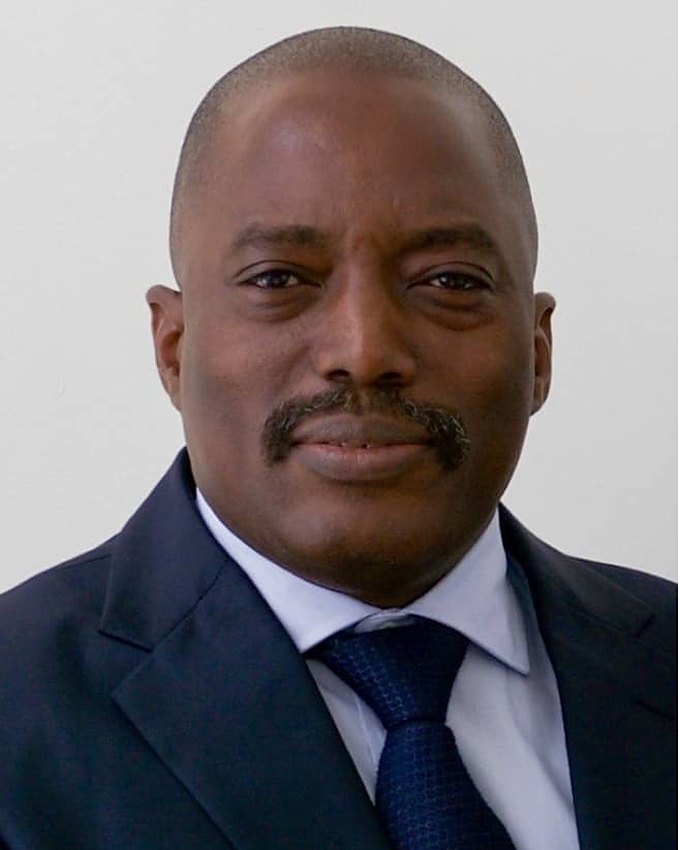 President
Archives of the Front
Président de la République démocratique du Congo de 2001 à 2019. Il a conduit le processus de Doha et l’Accord pour la paix et la réconciliation en RDC, et a signé la déclaration fondatrice du Front. Son adresse à la nation du 9 octobre 2026 précède de trois jours la création du mouvement.

Former coordinator of the Congo River Alliance. As Vice-President of the Front, he presented to the base cadres in Goma the movement’s new institutional architecture and set out the content of the political declaration.
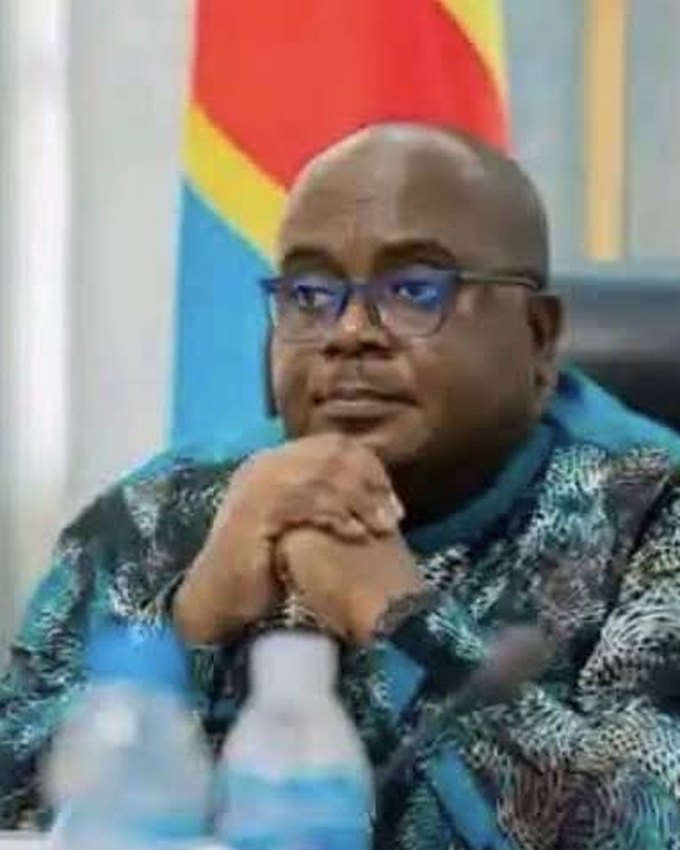 Vice-President
Archives of the Front
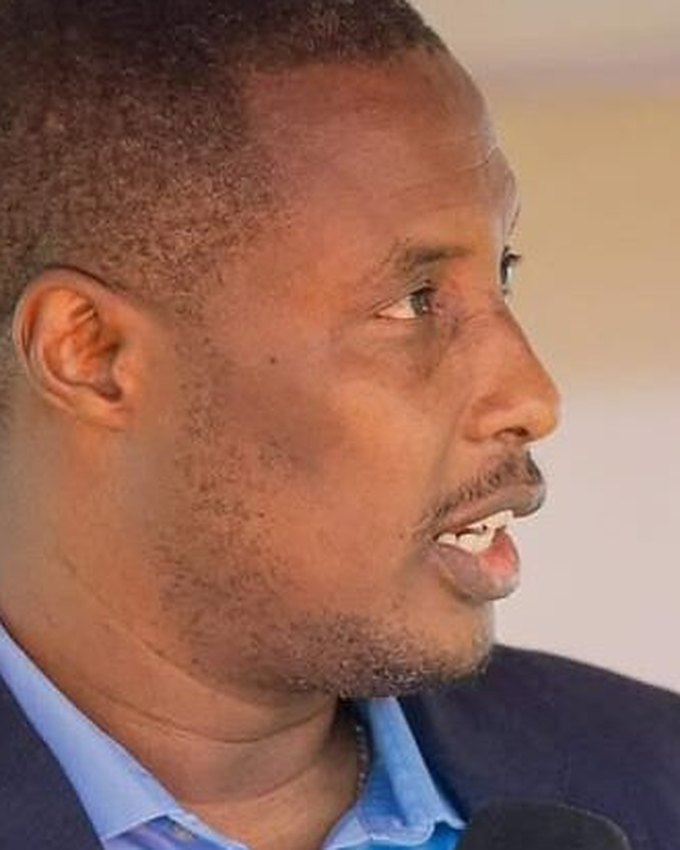
President of the 23 March Movement. He retraced the movement’s path before the base cadres and defended the idea that the change of name did not alter its objectives.

Commandant militaire du M23, il conserve ses fonctions de chef d’état-major général de l’Armée révolutionnaire congolaise avec rang de vice-président du Front. La direction politique et la direction militaire sont ainsi réunies dans une même chaîne de commandement.
 Secretariat
Archives of the Front
He ensures the day-to-day administrative and political management of the Front, coordinates all the activities of the organs and reports to the President.
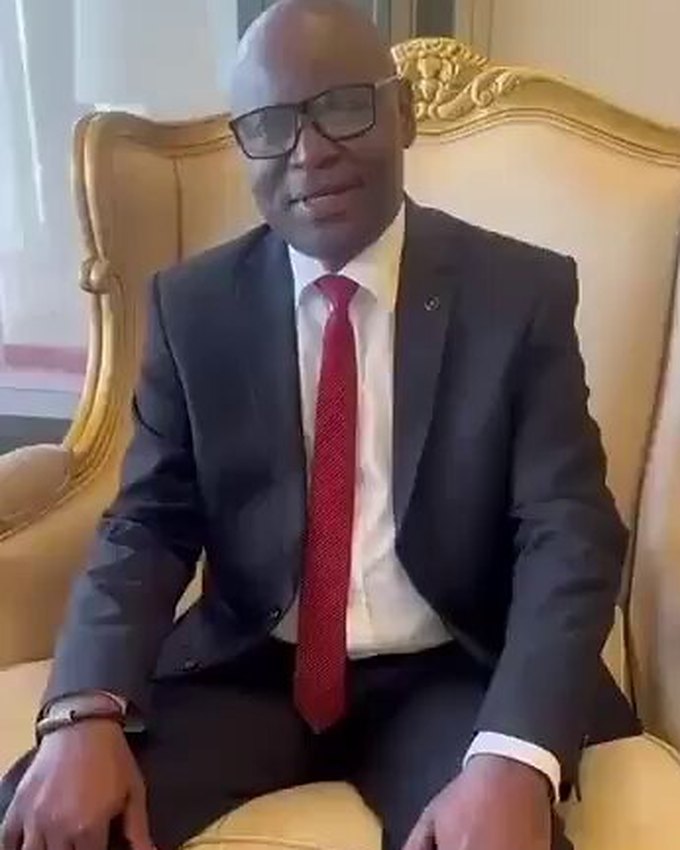 Secretariat
Archives of the Front
He assists the general secretary, coordinates the sections and cells and monitors the execution of the executive committee’s decisions.
 College
Archives of the Front
He holds the permanent secretariat of the organ that carries the Front’s founding authority and convenes its sessions.
The founding texts, the interventions of the leadership and the state of progress of the institutional build-up.
Vice-presidents Corneille Nangaa and Bertrand Bisimwa presented the institutional architecture of the Front in Goma: College of Founders, Council of the Revolution, Presidency and Executive Committee.
The signatories, gathered in Goma on 10 and 11 October, adopted the twelve-point text creating the Front for the Refoundation of the Nation and ending the existence of the Alliance Fleuve Congo.
Joseph Kabila addresses the nation: an indictment of the governance, a defence of inclusive national dialogue, warnings on mining agreements and the announcement of new initiatives.
A twelve-point citizen pact to “save the Congo from the abyss”: an end to the tyranny, stopping the war, restoring the rule of law and the freedoms, reconciliation and economic sovereignty.
The Front’s charter: the doctrine, the country’s key figures and public monitoring of the commitments made.
The country is in peril: to do nothing is to be complicit. The Front was founded in Goma on 12 October 2026 — its installation phase is open. Here is how to take part.

Two minutes to become a member: membership status, contact details, validation. No membership application is ever refused on political grounds.
En savoir plus →The Front is built from the village to the province. Sections, cells, committees: every neighbourhood, every commune, every territory can organise itself.
En savoir plus →A space for training, debate and initiative for Congolese youth: cadre schools, thematic clubs, field campaigns.
En savoir plus →
A third of the leadership positions are reserved for them. National, provincial and local coordinations, with a programme on violence and legislation.
En savoir plus →
Millions of Congolese abroad. To keep them, organise them, bring them back to invest: sections, committees and permanent representation.
En savoir plus →
Interview requests, accreditations, the press kit and the Front’s statements. The press is a power of oversight, not an adversary.
En savoir plus →Every day without a ceasefire, without truth and without the State is one more day of deaths, displacement and ruin. The Front’s installation phase is open: the moment to act is now.
This box is maintained by the General Secretariat: it publishes only the coverage validated by the communications department. Critical analyses and hostile positions do not appear here. Every article links back to its original source.
Coverage validated by the General Secretariat of the Front.
The report of the Goma press conference, the announcement of the five organs and the unanimous appointment of the leadership.
Read the article →The address to the nation of 9 October and the review of the twelve measures of the citizen pact.
Read the article →The founding of the Front in Goma and the unified leadership of the movement.
Read the article →The message to the nation, the inclusive national dialogue and the announcement of the next initiatives.
Read the article →The review of the twelve-measure citizen pact and the response to the call to act.
Read the article →The address to the nation, the question of the institutions and the commitment to national dialogue.
Read the article →The five areas covered by the address to the nation.
Read the article →The historical lineage of the movement and the charter it claims.
Read the article →The presentation of the political declaration and of the institutional architecture laid out in Goma.
Read the article →The General Secretariat keeps this box up to date. Report any coverage of the Front to us: it is reviewed, then published if selected.
The Front for the Refoundation of the Nation (FRN) is a Congolese political and military movement founded on 12 October 2026 in Goma, by a collective act signed by its founders on the basis of article 64 of the Constitution. It succeeds by right to the Alliance Fleuve Congo and is placed under the authority of Joseph Kabila, president of the Front. Its reference text is “The Pact for National Renewal”, published in French and in English on 26 October 2026.
A measure can only be examined with eight elements: its legal basis, the person responsible, its full cost, its funding source, its timetable, its human-rights safeguards, its avenues of appeal and a result indicator. These eight criteria are those of the Pact for National Renewal, and every measure proposed by the Front is required to meet them.
Any person of Congolese nationality, aged eighteen or over, of good moral standing, who adheres to the ideals of the Front and has no incompatible membership may file an application. The General Secretariat processes it and refers it to the competent section or cell. Membership is individual, free, without discrimination, and recorded at every level.